Quantum computing is poised to transform healthcare research fundamentally. Its ability to process vast datasets and perform complex analyses offers unprecedented opportunities in predictive modeling and personalized medicine. As healthcare providers seek innovative solutions, the implications of this technology extend beyond diagnostics and treatment plans. The landscape of drug discovery and genomics is evolving rapidly, prompting critical questions about the future of patient care and the ethical considerations that accompany these advancements.
Understanding Quantum Computing and Its Fundamentals
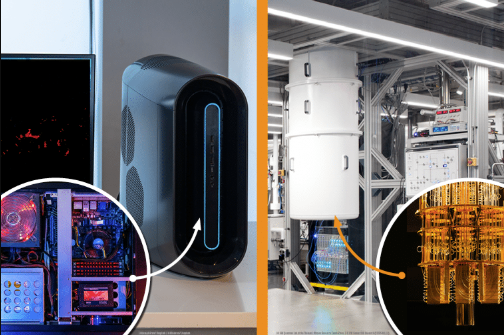
Quantum computing represents a paradigm shift in computational capability, leveraging the principles of quantum mechanics to process information in fundamentally different ways than classical computing.
By harnessing superposition and entanglement, quantum systems can tackle problems with immense computational complexity, enabling solutions previously deemed impossible.
This innovative approach promises to redefine data processing, unlocking new potentials and fostering an environment of intellectual freedom and exploration.
Current Applications of Quantum Computing in Healthcare
The integration of quantum computing in healthcare is beginning to transform various facets of the industry, showcasing its potential through several innovative applications.
Quantum algorithms enhance healthcare analytics by optimizing data processing and improving predictive modeling. This advancement enables more accurate patient diagnostics, personalized treatment plans, and efficient resource allocation, ultimately fostering a more responsive and adaptive healthcare environment tailored to individual needs.
The Future of Drug Discovery and Genomics
Advancements in quantum computing are poised to revolutionize drug discovery and genomics by enabling unprecedented computational capabilities.
Quantum algorithms facilitate complex molecular simulations, allowing researchers to explore vast chemical spaces and predict interactions with remarkable accuracy.
This innovative approach not only accelerates drug development but also enhances understanding of genetic variations, paving the way for breakthroughs that could transform therapeutic strategies and genomic research.
See also: arcenturf-gagnant
Implications for Personalized Medicine and Patient Care
As healthcare increasingly shifts towards personalized medicine, the integration of quantum computing holds significant promise for enhancing patient care.
By enabling the analysis of vast genetic and clinical data, quantum computing can facilitate the development of tailored treatments that cater to individual patient needs.
This innovative approach is expected to improve patient outcomes, ultimately transforming the landscape of healthcare into a more efficient and effective system.
Conclusion
In summary, quantum computing stands at the forefront of a healthcare revolution, acting as a beacon that illuminates the path toward advanced diagnostics and tailored treatments. Its ability to process vast datasets and simulate molecular interactions accelerates drug discovery, akin to a master key unlocking the complex mechanisms of human health. As this technology evolves, it promises to reshape the landscape of personalized medicine, ultimately leading to improved patient care and outcomes in a more responsive healthcare system.