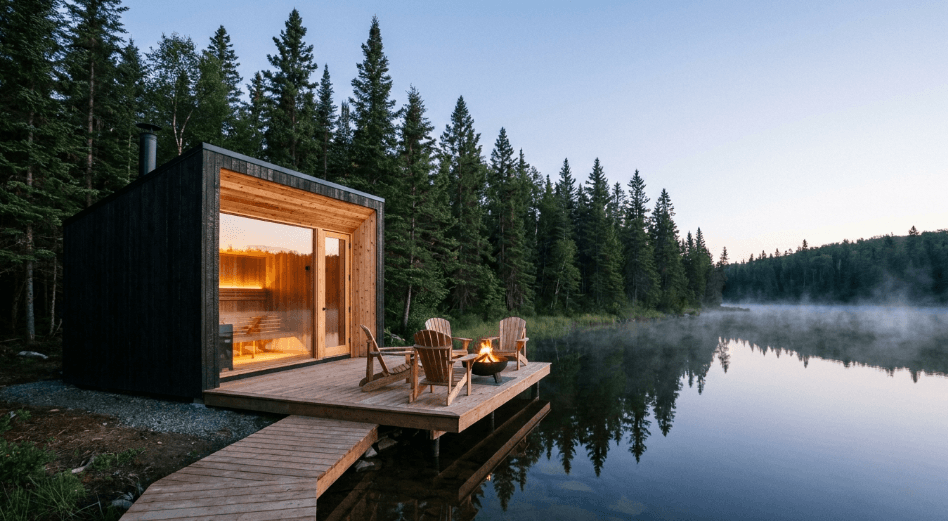
Getting the most out of an outdoor sauna on a tight budget comes down to three habits: heat to 170°F to 180°F rather than the top of the range, share each heat-up across as many household members as possible, and keep sessions to two or three rounds instead of reheating later the same day. Done well, these habits cut wasted electricity without cutting the actual experience short.
Wasteful Habit vs. Budget-Smart Habit: Reheating
The single biggest budget mistake is heating the cabin, using it once, letting it go cold, and reheating it again later the same day. Each cold start costs roughly the same in kilowatt-hours regardless of how short the session that follows turns out to be, since most of the energy goes into bringing the room and the rocks up to temperature in the first place. The budget-smart version is scheduling one longer session, two to three rounds with a cooldown in between, and getting everyone who wants to use it into that same window. A household of three or four sharing one heat-up instead of two separate ones can cut the weekly electric cost of the sauna by close to half.
Wasteful Habit vs. Budget-Smart Habit: Overheating
Traditional cabins commonly run 170°F to 195°F once fully warmed, and it is tempting to chase the top of that range assuming hotter automatically means better. In practice, most people get a full, satisfying session at 170°F to 180°F, and pushing toward 195°F mainly adds extra heater run time before the session even starts, plus more energy to hold that higher temperature throughout. Unless there is a specific reason to run hotter, dialing the thermostat back 10 to 15 degrees from the top of the range is a nearly invisible change to the experience and a real one to the bill.
How Should Timing Work for a Budget-Minded Session?
A standard pattern is 15 to 20 minutes of heat, a 5 to 10 minute cooldown outside, then a second round, sometimes a third. That structure does not change on a budget, but the scheduling around it does. Picking one consistent evening or two set nights a week, rather than sauna-ing whenever the mood strikes, makes it far easier to batch use and avoid the reheat penalty. Some households set a standing time, right after dinner or before bed twice a week, specifically so the heater only fires up when everyone who wants in is actually ready.
What Does Budget-Friendly Etiquette Look Like Outdoors?
Sharing a heat-up with housemates or family works better with a few ground rules. Agree on a start time so the cabin is not held at temperature for twenty extra minutes waiting on a late arrival, since that idle time is pure wasted energy. Keep phones and food out, both for comfort and because a shorter, focused session gets everyone through their rounds faster, which means the door opens and closes less and the room holds heat better between rounds. None of this requires spending anything, it is simply coordinating so one heat-up covers everyone rather than several.
Do You Need Special Gear, or Does Basic Work?
A towel, a plain robe, and a pair of sandals for the walk out cover almost everyone’s needs. Specialty sauna hats, wooden buckets and ladles, and thermometer-hygrometer combos are common upgrades but not required to get a genuinely good session. Buyers comparing cabin sizes and heater options before deciding how much cabin their household actually needs, rather than overbuying capacity nobody uses, can look over sweatdecks.com/collections/outdoor-saunas to see how two-person and four-person builds differ on price and expected running cost. Matching cabin size to how many people will realistically share a session is one of the better ways to avoid paying for space and heater capacity that goes unused most of the year.
Does Cold Weather Change Any of This?
Winter sessions still follow the same reheat-avoidance logic, but the stakes are higher because a cold outdoor cabin has to fight ambient temperature on top of bringing the room up to target. A cabin left to go cold between two separate winter sessions costs more to bring back up than the same gap would in mild weather, which makes the shared, single-heat-up approach even more worthwhile from November through March. Some households simply shift to one longer weekend session in winter instead of two shorter weekday ones, trading a bit of spontaneity for a noticeably smaller electric bill during the coldest months.
How Much Does Hydration and Cooldown Cost?
Essentially nothing extra. Tap water before and after a session covers hydration needs for most people, and a garden hose or a bucket of cold water works as well as a dedicated cold plunge for the cooldown between rounds. Half a liter or more of sweat during a good session means water matters as much as the heat itself, and it is one of the few parts of the routine that costs nothing regardless of budget.
What Does the Research Say About Frequency?
A systematic review in Evidence-Based Complementary and Alternative Medicine reported sauna bathing associated with a range of favorable health markers across regular users, and a 2023 Mayo Clinic Proceedings review found similar associations when sauna habits were combined with other everyday lifestyle factors. A separate Mayo Clinic Proceedings review specifically linked frequent sauna use with cardiovascular benefits in long-term cohorts. These remain association findings from observational data, not proof that sauna use alone changes outcomes, but two to three sessions a week, shared efficiently, lines up well with the frequency most of this research actually studied.
Frequently Asked Questions
Does using an outdoor sauna correctly save money?
Yes. Sessions timed to reach a comfortable finish rather than reheating twice, and rounds shared between two or more people, use noticeably less electricity per person than short, solo, repeated heat-ups.
What temperature is worth heating to on a budget?
170°F to 180°F covers most traditional sessions well. Pushing past 190°F adds heater run time and cost without much added benefit for a typical 15 to 20 minute round.
Is it wasteful to reheat an outdoor cabin multiple times a day?
Generally yes. Each reheat carries a fixed energy cost to bring the room back to temperature, so consolidating household use into one shared evening session is more efficient than several separate heat-ups.
Do you need special gear for an outdoor cabin, or does basic work fine?
Basic works fine. A towel, a robe, and sandals cover the walk and the cooldown. Specialty sauna gear is nice to have but not required for a good, budget-friendly session.
How often should a budget-conscious household actually use their sauna?
Two to three sessions a week, shared among household members in one sitting when possible, keeps both the electric bill and the wear on the heater and rocks reasonable over a full year.
References
- Clinical Effects of Regular Dry Sauna Bathing: A Systematic Review, Evidence-Based Complementary and Alternative Medicine, 2018
- Does the Combination of Finnish Sauna Bathing and Other Lifestyle Factors Confer Additional Health Benefits? A Review of the Evidence, Mayo Clinic Proceedings, 2023
- Cardiovascular and Other Health Benefits of Sauna Bathing: A Review of the Evidence, Mayo Clinic Proceedings, 2018